

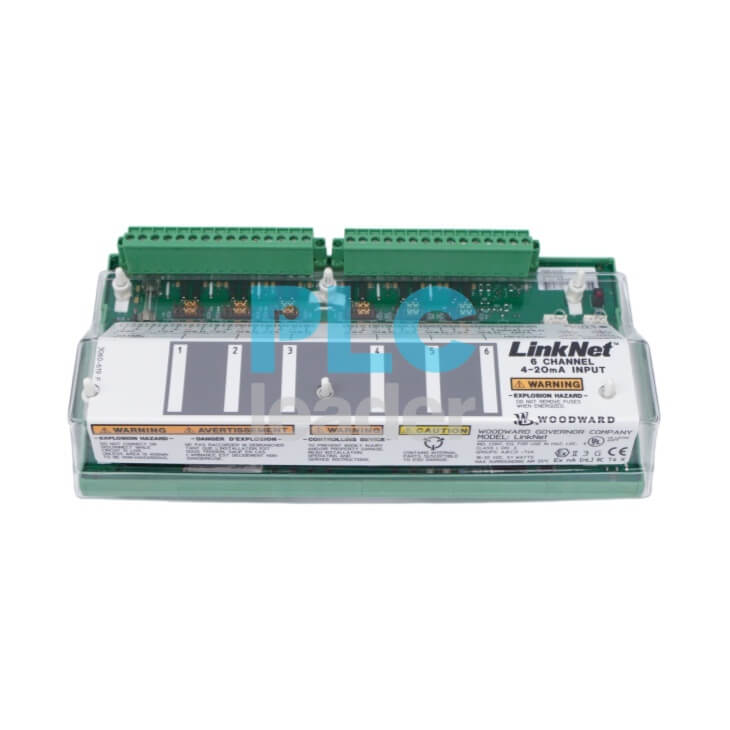
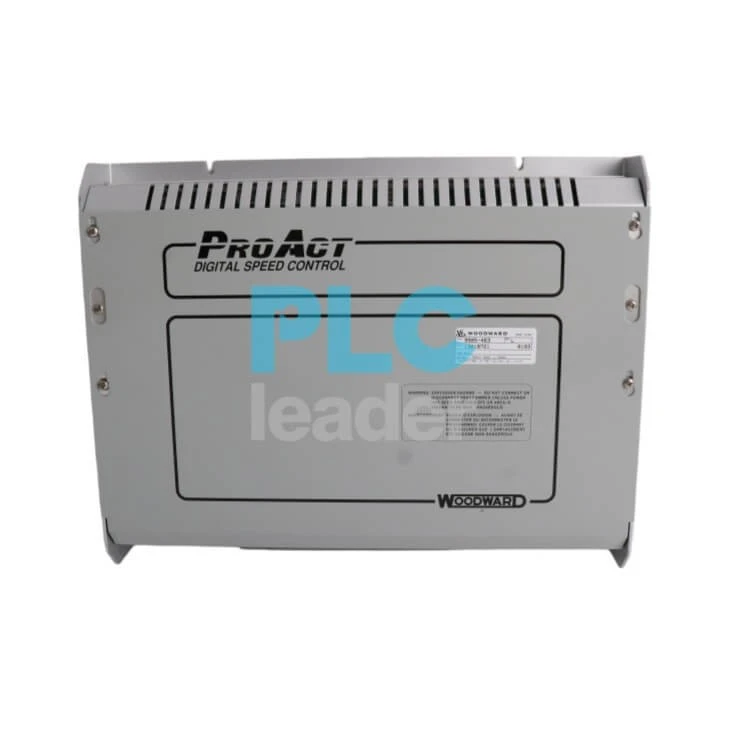
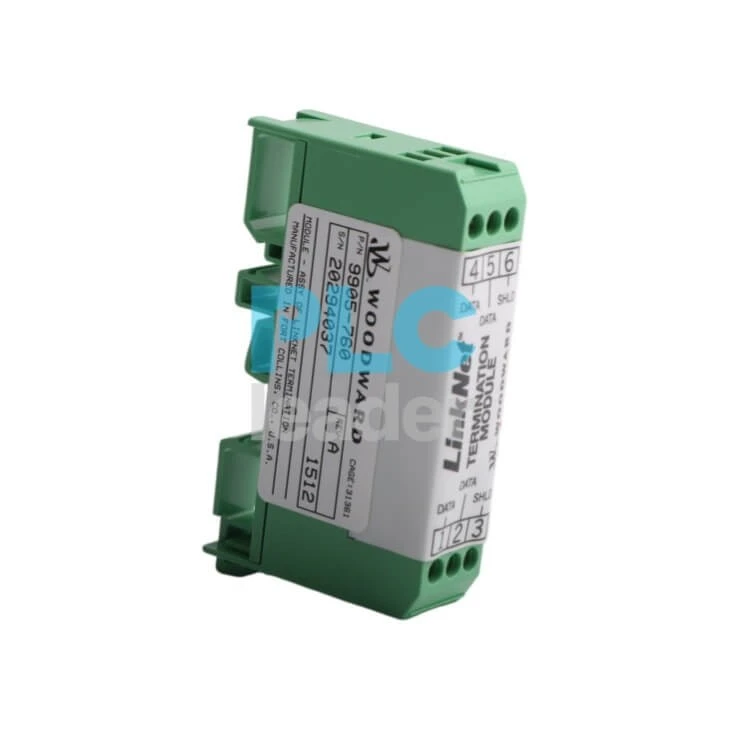
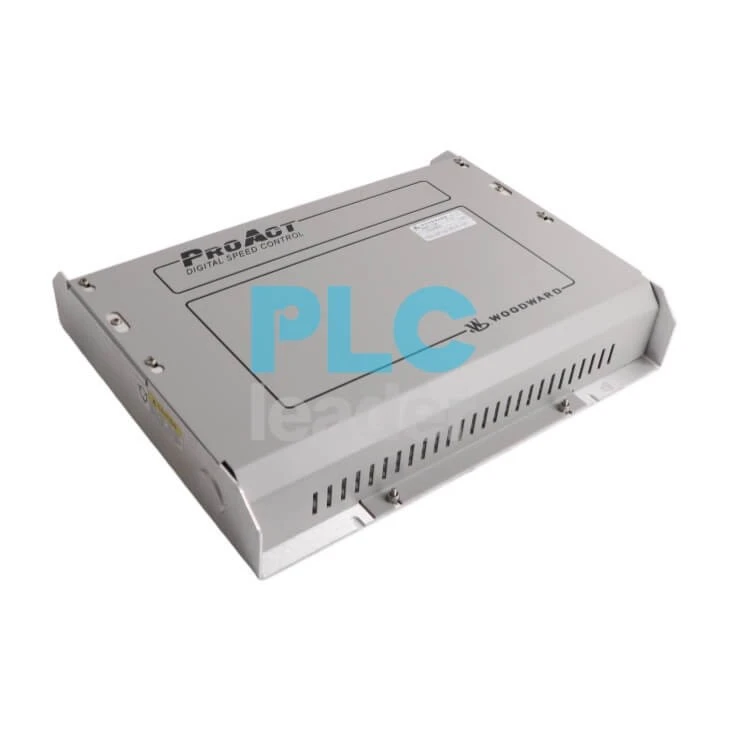
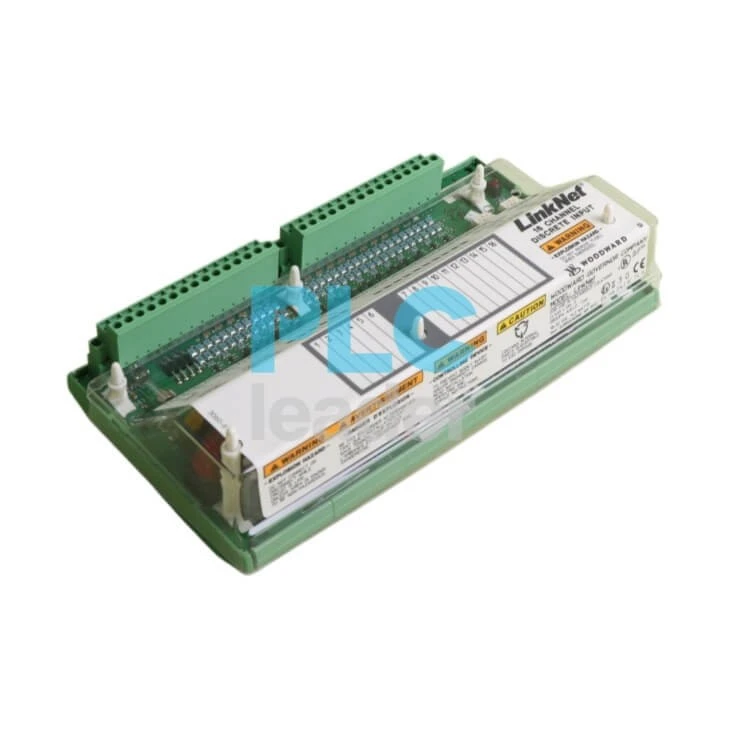
The Woodward 9905 series is a highly integrated microprocessor-based digital control platform primarily used for precision control and overspeed protection of steam turbines, industrial gas turbines, and turbine compressors. The system employs a rack-mount or base-mount design, utilizing a combination of various functional cards to achieve precise drive of valve actuators, closed-loop speed regulation, and communication with a host computer (DCS/PLC).
We understand the extremely high demands placed on hardware stability in industrial settings. Whether you urgently need to replace outdated control cards or are looking for compatible communication expansion modules for a new project, we can provide you with comprehensive support, from hardware matching to technical documentation.We maintain a large inventory of core models in this series to ensure your equipment can be quickly restored to operation in the event of a sudden failure.
Woodward 9905 Series Quick Overview
| Platform | Part Numbers | Hardware Characteristics | Typical Applications | Lifecycle |
| LinkNet Distributed I/O System | 9905-969, 9905-971, 9905-970, 9905-760 | Form Factor: DIN-rail mounted slim modules with pluggable headers. System Components: Includes A/I, D/I, RTD nodes, and network termination modules. |
Remote field signal acquisition and serial communication connection for MicroNet or 505 control systems. | Legacy / Support (Active service for spares) |
| Turbine & Engine Digital Control Systems | 9905-463, 9905-792 | Form Factor: Enclosed chassis control assemblies or rack-mounted processing cards. Architecture: Microprocessor-based platform with embedded governor firmware. |
Critical speed control, system power management, and safety protection for steam/gas turbines and large industrial engines. | Legacy / Phase-out (Replaced by newer series) |
Technical Notes
- LinkNet Network Termination:Model 9905-760 is a network termination resistor module. It must be properly installed at the physical end of the LinkNet serial network to prevent communication faults.
- Hardware Variations:Modules with similar appearances (e.g., 9905-969 A/I and 9905-971 D/I) feature entirely different internal circuitry and pinouts. They are not interchangeable. Verify the functional
Technical Compliance & LINKnet Core Snapshot
- Functionality & Module Families: Distributed I/O network modules interfacing directly with primary controllers (such as NetCon or MicroNet) via serial communication links. The 9905 series encompasses various I/O types, including analog inputs/outputs, discrete inputs/outputs, and specific function modules designed for harsh industrial prime mover control environments (including representative models such as 9905-969, 9905-971, 9905-792, 9905-760, 9905-970, and 9905-463).
- Power Requirements: Operates on a standard industrial input voltage range of 18–32 Vdc (nominal 24 Vdc). Power dissipation and thermal loading vary dynamically by specific module variant (e.g., approximately 3.1W for low-density analog models up to 14.2W for high-density discrete variants).
- Network & Topology: Communicates over a CAN-based serial network protocol via a single twisted-pair wire per network trunk, providing deterministic I/O sequencing and monitoring. Modules are individually field-addressed using two onboard rotary switches to establish network node IDs.
- Electrical Isolation: Designed with high dielectric isolation ratings to protect the main controller trunk: Network to I/O channel: 277 Vac; Power supply input to network: 277 Vac; Power supply input to I/O channel: 500 Vdc.
- Certifications & Environment: Certified for hazardous locations including Class I, Division 2, Groups A, B, C, and D. Rated to operate reliably within an ambient air temperature range of –40 to +55 °C with a Temperature Code rating of T4A.
Core Part Showdown: Woodward 9905-969 vs. 9905-971 Key Functional Differences
Within the Woodward LinkNet distributed I/O architecture, the and share identical physical footprints and DIN-rail enclosures. However, their internal circuitry and signal processing capabilities are entirely distinct. Below are the three primary dimensions of comparison that procurement teams and field engineers must consider:
Signal Processing Type & Function
- 9905-969 (Analog Input Module):Specifically designed to sample continuously varying analog current loops. Its primary field connections include 4–20 mA pressure transmitters, flow meters, temperature transmitters, and valve position feedback devices.
- 9905-971 (Discrete Input Module):Exclusively engineered to register on/off binary states. Its primary field connections include volt-free/dry contacts, limit switches, interlock relays, and push buttons.
Channel Capacity & Hardware Specifications
- 9905-969 (Analog Input):Features 6 independent input channels. Each channel is backed by high-precision A/D (analog-to-digital) conversion circuitry to translate physical loop currents into precise digital values for the main controller.
- 9905-971 (Discrete Input):Packaged with a higher density of 16 independent input channels. The internal circuitry acts strictly as logical sense inputs (0 or 1) and does not possess the capacity to measure or calculate current variations.
Field Interchangeability & Sourcing Warning
- Physical Pinout Incompatibility: Although both modules feature the same pluggable terminal block headers and mount identically on a DIN rail, their low-level internal schematics and pin configurations are completely incompatible.
- Zero Interchangeability: These two modules cannot substitute for one another under any circumstances during field maintenance. Replacing a with a where a 4–20 mA loop source is wired will result in a total loss of data acquisition and potential circuit damage due to voltage mismatches. Replacement parts must be sourced on a strict 1:1 part number match to maintain system integrity.
Woodward LinkNet Distributed I/O System - Intelligent Field Acquisition
- Input Power Voltage: 18 to 32 Vdc (24 Vdc Nominal)
- Channel Sampling Resolution: 12-Bit Analog-to-Digital (A/D) resolution
- Official Operating Temperature: 0°C to +55°C (32°F to 131°F)
- Channel Isolation: 500 Vdc continuous from power input to I/O channels (except discrete inputs)
- Max Network Nodes: Up to 60 nodes on a single LonWorks serial trunk (Note: If started and operated in cold environments from –40°C to 0°C, the single-network node limit is strictly reduced to 20 nodes)
- Max Network Distance: Maximum standard network trunk cable length is 150 meters (Maximum drop line/stub length is 300 mm)

The table below provides the absolute hardware breakdown of the LinkNet Distributed I/O system, including channel capacity limits, hardware impedance, onboard status LEDs, and factory nameplate-verified individual power requirements.
| Product Image | Model | Network Protocol | Channel Capacity & Signal Specs | Hardware Impedance & Protection | Onboard Status LEDs | Power Required | Action |
 |
9905-969 | LonTalk Serial Protocol | 6-Channel Analog Input (4–20 mA differential current input) |
250 Ω internal input impedance with software broken-wire detection | 1x Network Status LED 1x Module Health LED |
3.1 Watts @ 18-32 Vdc | Inquire Now! |
 |
9905-971 | LonTalk Serial Protocol | 16-Channel Discrete Input (24 Vdc wet contact/discrete input) |
Internal power-sourced sensing (Configurable via external jumpers on Pins 34 & 35) | 1x Network Status LED 16x Channel Status LEDs |
14.2 Watts @ 18-32 Vdc | Inquire Now! |
 |
9905-970 | LonTalk Serial Protocol | 6-Channel RTD Temperature Input (100 Ω Platinum RTD) |
Greater than 2 MΩ internal input impedance with 3-wire lead resistance compensation | 1x Network Status LED 1x Module Health LED |
3.7 Watts @ 18-32 Vdc | Inquire Now! |
 |
9905-760 | Pure Passive Hardware | N/A(Physical trunk termination component) | Built-in 120 Ω impedance matching to eliminate network reflection noise | N/A(Passive network component) | 0 Watts (No power consumption) |
Inquire Now! |
📌 LinkNet System Note:LinkNet intelligent I/O modules including models 9905-969, 9905-970, and 9905-971 transmit field signals directly to the main Woodward MicroNet or 505 controller over a serial network. The 16-channel discrete input module requires up to 14.2W at full load. Because of these large power differences, you must calculate the total cabinet power budget and allow proper physical spacing for cooling. Finally, you must install the 9905-760 termination module at the physical end of the network cable to prevent LinkNet communication errors.
Woodward 9905 Control Platform - Turbine & Engine Digital Control Systems
The Woodward 9905 platform delivers dedicated hardware for prime mover automation, centered on the comprehensive 505 Digital Governor System for steam turbine and engine regulation. This digital control architecture is widely implemented throughout global industrial power plants and marine propulsion configurations. While the main controller processes high-speed dynamic speed and actuator loops, its integrated gateway hardware extends the system's operational capability by bridging critical turbine telemetry directly to plantwide supervisory networks.
| Product Image | Model | Control System Type | Input Voltage & Power | Physical I/O & Signal Specs | Communication Interface | Action |
 |
9905-463 | 505 Digital Governor System | 18–32 Vdc (24 Vdc Nominal) Max Power Required: 25 Watts |
MPU Speed Input (1–30 Vrms) 4–20 mA Actuator Output (Max 360 Ohm load) |
Dual LonTalk Serial Ports RS-232/RS-485 Modbus |
Inquire Now! |
 |
9905-792 | LinkNet Communication Gateway | 18–32 Vdc (24 Vdc Nominal) Max Power Required: 4.5 Watts |
Multi-Node Network Bridging Capacity Isolated Routing Backplane |
LonTalk FTT-10 Serial Trunk High-Speed Transceiver Links |
Inquire Now! |
Note:The Woodward 9905-463 digital governor system requires a dedicated 24 Vdc nominal power supply capable of supporting its 25W peak operating load, especially during high-transient actuator positioning. When deploying the 9905-792 communication gateway alongside the governor, ensures proper network shielding on the LonTalk FTT-10 serial trunk to prevent electromagnetic interference from modifying critical turbine speed data. Physical grounding must comply with the standard industrial control cabinet guidelines to maintain uninterrupted serial routing and bus stability.
Woodward 9905 Series - Extended Inventory & Related Control Models
To support complete industrial facility maintenance and comprehensive turbine control panel overhauls, our warehouse carries a verified stock of legacy and highly specialized Woodward 9905 hardware profiles. This extended inventory includes isolated process telemetry modules, specialized turbine governors, and critical power management synchronization systems.
| Product Image | Model | Product Name & Role | Power Supply Specs | Channel Capacity & Signal Specs | Action |
 |
9905-968 | LinkNet Isolated Analog Input | 18–32 Vdc (24 Vdc Nominal) Max Power Required: 4.5 Watts |
6 Channels / 4–20 mA Current Inputs Channel-to-channel isolation architecture |
Inquire Now! |
 |
9905-864 | Peak 150 Steam Turbine Control | 88–132 Vac / 90–140 Vdc Configurable Max Power Required: 50 Watts |
MPU Input / 4–20 mA Actuator Control Loop NEMA 4X certified weather-proof chassis |
Inquire Now! |
 |
9905-021 | 2301A Speed & Load Control | 20–40 Vdc (24 Vdc Nominal) Max Power Required: 15 Watts |
Proportional Actuator Drive Output (0–20 mA / 0–200 mA) Isochronous and droop load sharing circuits |
Inquire Now! |
 |
9905-003 | SPM-A Synchronizer Module | 115 / 230 Vac Input Options (±10%) Max Power Required: 5 Watts |
Generator/Bus Voltage Phase Monitoring Links Automatic phase-lock matching control loops |
Inquire Now! |
 |
9905-096 | Automatic Generator Loading Control | 115 / 230 Vac Dual Configuration Max Power Required: 12 Watts |
Utility Parallel Ramp Control Logic Internal potential transformer input interface |
Inquire Now! |
 |
9905-860 | Load Sharing & Synchronization Unit | 24 Vdc / 115 Vac Multi-Compatibility Max Power Required: 15 Watts |
Active Kilowatt Balance Management Links Multi-generator parallel operation networks |
Inquire Now! |
Inventory Support Note:
All listed extended Woodward 9905 control hardware, including legacy 2301A/SPM-A units and Peak 150 configurations, are maintained in original physical revisions. Due to the precise wiring requirements of legacy power management and synchronization modules, engineers must verify the specific terminal block layouts and potential transformer (PT) input scaling matching your existing control panels before system installation to avoid unexpected grid disruption.
Architectural Evolution & Engineering Matrix
From a legacy hardware migration perspective, the Woodward components bearing the "9905-" part number prefix reflect decades of prime mover automation-shifting from discrete analog logic to distributed microprocessor controllers and high-speed network interfaces. The following matrix outlines the mechanical and technical transition across these hardware generations:
| Woodward Spec | 2301A & SPM-A Series(9905-021 / 9905-003 / 9905-096 / 9905-860) | 505 & Peak 150 Governors(9905-463 / 9905-864) | LinkNet I/O & Gateways(9905-969 / 9905-971 / 9905-968 / 9905-792) |
| Stock Status | Obsolete Stock Available (Factory-sealed/Refurbished, Direct Supply) |
Main Heavy Inventory (Large stock, Immediate shipment ready) |
Brand New Stock (Latest hardware revision, Factory standard) |
| Architecture | Solid-state discrete analog circuits & high-precision operational amplifiers. | 16-bit / 32-bit digital microprocessor hardware control platforms. | Multi-protocol high-speed dedicated industrial network processor structure. |
| Configuration | No internal software memory; relies strictly on physical potentiometer hardwired tuning. | Onboard non-volatile EEPROM chip for application configuration storage. | Embedded flash memory (Flash) supporting online routing map and local data buffering. |
| Hardware Interfaces | High-density terminal boards and ±4.5 Vdc analog load sharing lines. | Dedicated handheld programmer port and RS-232 serial diagnostic communication interface. | Galvanically isolated internal routing backplane and standard network transceivers. |
| Interconnect | 0 digital network nodes; completely relies on point-to-point analog interlocking. | Supports distributed I/O hardware expansion under proprietary LonTalk serial bus lines. | Single gateway integrates isolated bridging capability for up to 100+ field I/O channels. |
| Maintenance | Requires multimeters and screwdrivers for on-site manual tuning of loop gains. | Configurations adjusted via embedded firmware menus or original factory GAP software. | Configured via professional network software utility for fieldbus node topology mapping. |
System Migration Note:Upgrading from legacy 9905 analog units to modern distributed platforms eliminates point-to-point hardwiring. When implementing direct supply replacements, engineers must verify whether the targeted panel slot requires the autonomous analog loop logic of a 2301A or the serial network integration of the LinkNet platform to prevent physical wiring and protocol mismatch.
Technical Specifications
External Network Power Calculation
Each LINKNet module draws power from an external 24V DC power supply as well as the LonWorks network bus. When sizing the network system power supply or gateway (such as the network channels of Netcon or MicroNet), the 24V DC current (including the module's own power consumption and maximum channel load) of all installed modules within the same network segment must be summed up.
Typical Configuration Example:
- 9905-969 (4-Channel 4-20 mA Analog Input): 70 mA @ 24V DC
- 9905-971: (16-Channel Discrete Input): ~140 mA @ 24V DC
- 9905-760 (16-Channel Discrete Input): 100 mA @ 24V DC
- 9905-463 (16-Channel Discrete Input, with LED status indication): 140 mA @ 24V DC
Total 24V DC Current: ~420 mA. Using a standard industrial power supply with a 2A output at 24V DC is sufficient to support this control network segment.
Hardware Node Addressing and Network Retention
Woodward LINKNet modules do not rely on internal batteries to retain configurations. Network node identification depends entirely on two sets of hexadecimal rotary address switches located on the base, while control logic and safety fail-safe states are maintained by the master controller's GAP software.
Typical Network Timeout (Watchdog) Tripping Time: 800 ms (Outputs automatically reset to safe states upon communication failure)
Observe the "STATUS" and "SERVICE" LED indicators on the front of the module.
When replacing a module, ensure that the network cable (LonWorks shielded twisted pair) is intact. There is no internal capacitor holding mechanism; however, since the mounting base features an automatic network loop-closing function, hot-swapping can be performed directly after verifying that the rotary switches on the back of the new module match the faulty one, without interrupting the normal communication of other nodes in the network.
Software and Controller Compatibility
The following table lists the minimum recommended compatibility matrix for LINKNet (9905 series) modules within common Woodward control systems and GAP (Graphical Application Program) software environments. The modules themselves do not require independent firmware upgrades; their compatibility depends on the software block support of the master control system:
| Master Controller Series | Minimum Recommended System Software | Recommended Programming & Configuration Environment (GAP / Toolkit) |
| MicroNet / MicroNet Plus | v3.40 or higher | GAP v2.x or higher |
| 723PLUS Digital Speed Control | v2.01 Stable | Watch Window / Dedicated Configuration Environment |
| 505 / 505E Digital Turbine Control | v3.0 and above built-in support | 505 Dedicated Service Tool |
| Legacy Netcon System | v1.02 (Legacy) | Early GAP v1.x environment (limited support for some models) |
Note:
The module part number (such as 9905-970 RTD or 9905-792 Thermocouple) must strictly match the I/O block type dropped in the GAP software. If the physical hardware does not match the software configuration, a Configuration Error will be generated, and all channels on that node will be forced shut down. Before ordering replacement modules, always verify the hardware inventory via the original OEM GAP program.
LINKNet 9905 Series Application Architecture and System Integration
The Woodward LINKNet 9905 modules serve as the core network I/O nodes in high-efficiency distributed control topologies. Specifically engineered for industrial turbines, large reciprocating engines, and critical power compressors, this platform allows multi-channel analog, discrete, and temperature-sensing signals to be integrated directly into the master controller's GAP (Graphical Application Program) engine via a deterministic fieldbus network:
In turbine regulation and industrial power control, the 9905 architecture acts as the distributed neural pathways for the master controller (such as the MicroNet or 505 platform). This architecture focuses on high-precision sensor signal acquisition and actuator control, enabling real-time monitoring and control of industrial turbine operating conditions without routing long-distance field cables back to the main control enclosure.
- Core Components: 9905-969 (4-Channel 4–20 mA Analog Input), 9905-971 (4-Channel 4–20 mA Analog Output), Master Controller Network Gateway.
- Key Benefit: Eliminates expensive shielded cable runs from complex turbine fields to the control room, reducing signal degradation through localized distributed placement.

Engine Condition Monitoring (Thermocouple & Temperature Isolation)
For multi-cylinder large reciprocating engines or compressors, the 9905 architecture leverages its specialized LonWorks distributed networking capabilities. It can be mounted directly on engine skids or nearby auxiliary enclosures to manage complex Exhaust Gas Temperatures (EGT), bearing temperatures, and lubrication oil RTD signals locally, utilizing strict network timeout protection to prevent process interruptions.
- Core Components: 9905-970 (6-Channel Pt100 RTD Input Module), 9905-792 (Thermocouple Input Module), Pluggable Mounting Base with passive network loop-back circuit.
- Key Benefit: Provides high channel-to-channel electrical isolation and localized linearization, combined with a built-in 800 ms hardware watchdog safety trip that ensures field actuators automatically reset to safe states during communication loss.

The 9905 platform executes distributed discrete control via a deterministic LonWorks (LonTalk) twisted-pair bus, synchronizing various dry contact switches, alarm interlocks, and solenoid valves with high-speed execution and high-density capacity. It supports daisy-chaining up to 16 nodes within a single network segment, making it perfectly suited for the coordinated control of generator set auxiliaries and process pumps.
- Core Components: 9905-760 / 9905-463 (16-Channel Discrete Input Modules), External 24 VDC Industrial Power Bus.
- Key Benefit: Modules support hot-swapping through a mounting base designed with an automatic loop-closing function; if a single I/O node fails or is removed, the entire LonWorks bus maintains uninterrupted communication, eliminating the need for dedicated redundant switching hardware.
Woodward LINKNet 9905 Migration Matrix
Direct Functional Replacement and Migration Paths
| Obsolete/Legacy Model | Current Replacement Model | Migration Logic and Technical Adaption Constraints |
| 9905-969 (4-Ch 4–20 mA AI ) |
9907-018 (LINKNet HT 4-Ch AI) |
EN: Hardware: Direct fit into legacy base; temp rating extended to 85°C. Software: Drop-in replacement. Retain original block and hardware address (01–F0). |
| 9905-971 (4-Ch 4–20 mA AO) |
9907-019 (LINKNet HT 4-Ch AO) |
EN: Hardware: Direct hot-swappable replacement on legacy base. Software: Retain block. Re-verify full-stroke calibration via Watch Window post-swap. |
| 9905-970 (6-Ch Pt100 RTD) |
9907-014 (LINKNet HT 6-Ch RTD) |
EN: Hardware: Plug-and-play; fully compatible with existing 3/4-wire Pt100 wiring. Software: Retain GAP blocks. Verify filter constants to prevent false EGT high trips. |
| 9905-760 / 9905-463 (16-Ch DI ) |
9907-017 (LINKNet HT 16-Ch DI) |
EN: Hardware: Direct fit into legacy LED mounting base. Software: Maps to existing channels. Match GAP block debounce times to new hardware spec. |
| 9905-792 (Thermocouple Input) |
9907-015 (LINKNet HT TC Input ) |
EN: Hardware: Direct mechanical swap. CJC relies on the physical base thermistor. Software: Secure module terminal screws tightly to prevent temperature reading drift. |
| Legacy 9905 Series (LonWorks Architecture ) |
LINKNet 4 Series (CAN Bus Architecture) |
EN: Network: Individual hot-swapping impossible. System forces shift from LonWorks to CAN (1 Mbps). Software: Re-author topology in GAP using blocks. Requires CPU upgrade for CAN support.LN4 |
Technical Risks and Pre-Migration Checklist
- GAP Block Library & CPU Firmware: When migrating from LonWorks (9905) to LINKNet 4 (CAN Bus), older master controller CPU firmware or legacy GAP 2.x environments will lack the required driver blocks. Verify the controller's embedded operating system compatibility tree via Woodward Toolkit prior to migration.
- Base Rotary Switches & Termination Resistors: Node addressing is determined by the hardware hexadecimal rotary switches on the mounting base, not the module. If replacing a damaged base, the new switches (01–F0) must match the original node configuration. Verify that network segment termination resistors (105 Ω or 52.3 Ω) are properly placed to prevent signal attenuation and intermittent node dropouts.
- Power Consumption & Current Sizing: LINKNet HT modules draw up to 3.0 Watts (125 mA @ 24 VDC) under full-load conditions. When executing large-scale bulk replacements of multiple nodes within a single enclosure, recalculate the capacity of the external 24 VDC power bus to prevent voltage dips that could trigger the 800 ms hardware watchdog.
Woodward 505 (9905 Series) Quick Troubleshooting Guide
Step 1: Check the 3 Front Panel LEDs (Status Quick-Check)
🟢 CPU OK (Not lit / Flashing): Internal Hardware/Power Failure. The Watchdog Timer has tripped. Check input power terminals. If power is normal, the CPU board must be replaced.
🟡 ALARM (Amber): System Warning (Running with fault). A non-critical fault has occurred (e.g., an analog input signal loss). The turbine will keep running, but you need to check the active alarm list.
🔴 TRIP (Red): Turbine Tripped. The controller has executed a shutdown command and forced the actuator output to 0.
Step 2: Check the "First Out" & Error Messages
When a 🔴 TRIP or 🟡 ALARM occurs, immediately press the ALARM or TRIP dedicated key on the front panel. Look for the "First Out" (the very first root cause of the trip) to pinpoint the failure.
Core Error Message Reference Table:
| Screen Message | Root Cause | Quick Action |
| First Out: External Trip | External safety interlock tripped (controller is healthy). | Check external ETS cabinet, relays, and interlock switches. |
| Speed Fail / Loss of Speed | Speed probe signal lost. | 1. Check if the probe is loose. 2. Measure static resistance (should be hundreds of ohms). 3. Verify shield wire is single-end grounded. |
| Actuator Fault | Actuator loop current abnormal (<2 mA or >22 mA). | 1. Inspect terminal wiring. 2. Measure coil resistance for burnout/open circuit. |
| Anlg In #X Fail | 4-20 mA analog input signal interrupted. | Troubleshoot transmitter, loop power supply, and cable continuity. |
Step 3: Standard Field Verification Procedure
- Do Not Blindly Reset: Always record the exact First Out message before clearing any faults.
- Signal Isolation Test: If an I/O fault (Anlg In Fail or Actuator Fault) is suspected, disconnect the field wires and use a loop simulator to inject a clean 4-20 mA signal directly into the 505 terminals. If the error clears, the fault is in the field wiring/instrument, not the Woodward controller.
FAQ
Frequently Asked Questions
Q: How should the speed sensor shield wire be grounded on a Woodward 505 (9905 series), and what is the risk of doing it wrong?
A: The manual specifies that the speed sensor shielded cable must be grounded at the Woodward controller end only. Grounding both ends creates a ground loop that introduces electromagnetic interference, causing erratic speed signals, Speed Fail alarms, and unexpected turbine trips.
Q: What must be done before running an Actuator Test in Service Mode?
A: The turbine must be completely at zero RPM and the main steam inlet valve must be fully isolated. Because this test mode bypasses the speed control loop to stroke the valve directly, any present steam will cause the turbine to roll uncontrollably and lead to dangerous overspeed.
Q: What is the first step to troubleshoot an Actuator Fault on Woodward 9905-463 or 9905-969 units?
A: Disconnect the actuator wires from the 505 terminal block and measure the DC resistance of the field coil loop to check for an open or short circuit. If the field circuit is intact, use the 505 Service Mode to output a test current to determine if the internal driver board or the field electro-hydraulic converter is faulty.
Q: When a turbine suddenly trips on a Woodward 9905 series controller and multiple alarms appear at once, how do you identify the true root cause?
A: Do not press reset. Press the TRIP key on the front panel to open the Trip Summary menu and look for the item labeled First Out at the top of the screen. This is the exact initial trigger captured by the CPU before the cascading alarms occurred.
Stock Control & Procurement
We stock the following Woodward 505 controller models (new, factory sealed):
- 9905-969, 9905-971, 9905-792, 9905-760
- 9905-970, 9905-463, 9905-968, 9905-860
- 9905-096, 9905-021, 9905-003, 9905-864
All units include:
- Original Woodward factory packaging
- Clear product status report (date code, firmware version if available)
- 1-year warranty
Lead time: Same-day processing for in-stock items. Shipping via DHL, UPS, or FedEx.
Need help verifying firmware compatibility or safety certification requirements?
- Email: sales7@apterpower.com
- WhatsApp: +86 180 3017 5807
- Response time: < 2 hours during business hours (GMT+8)


