

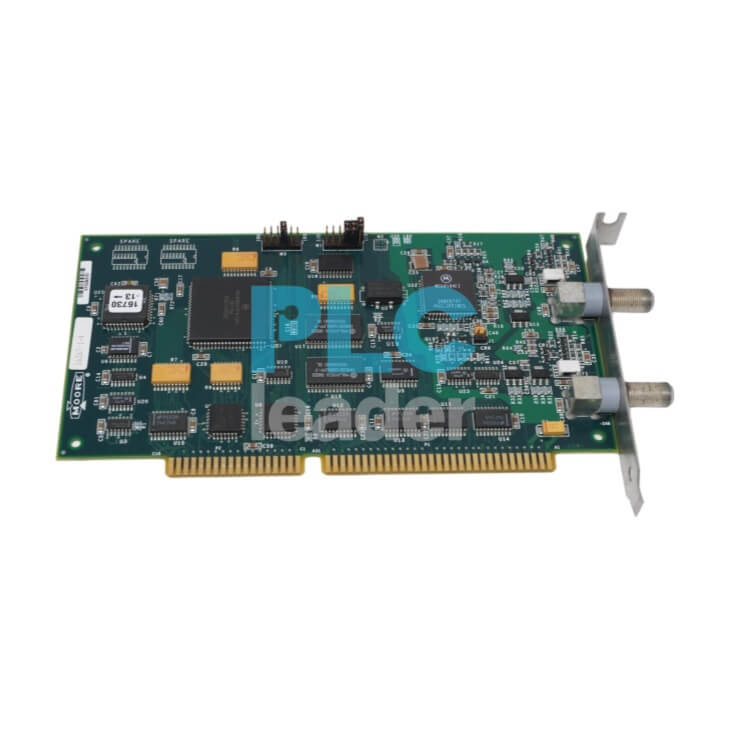
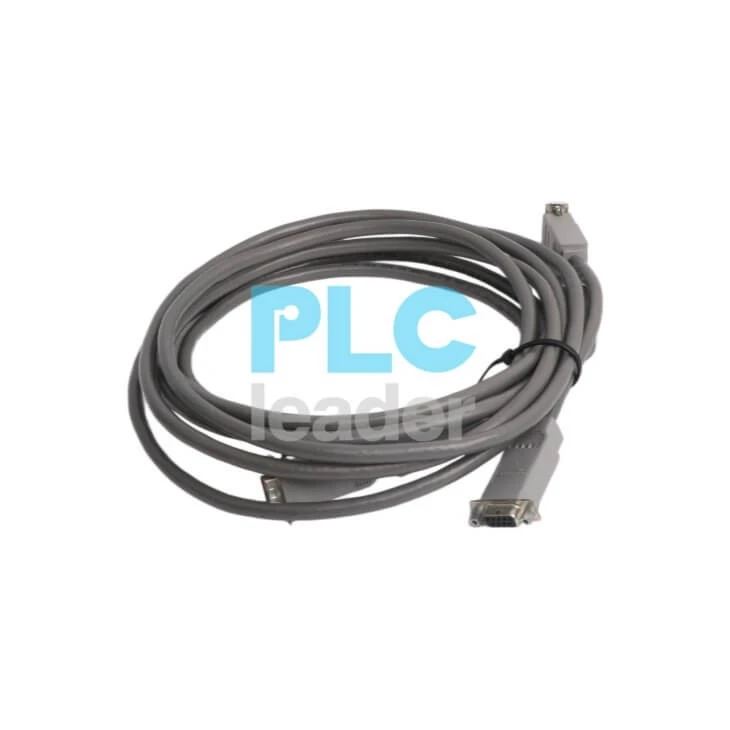
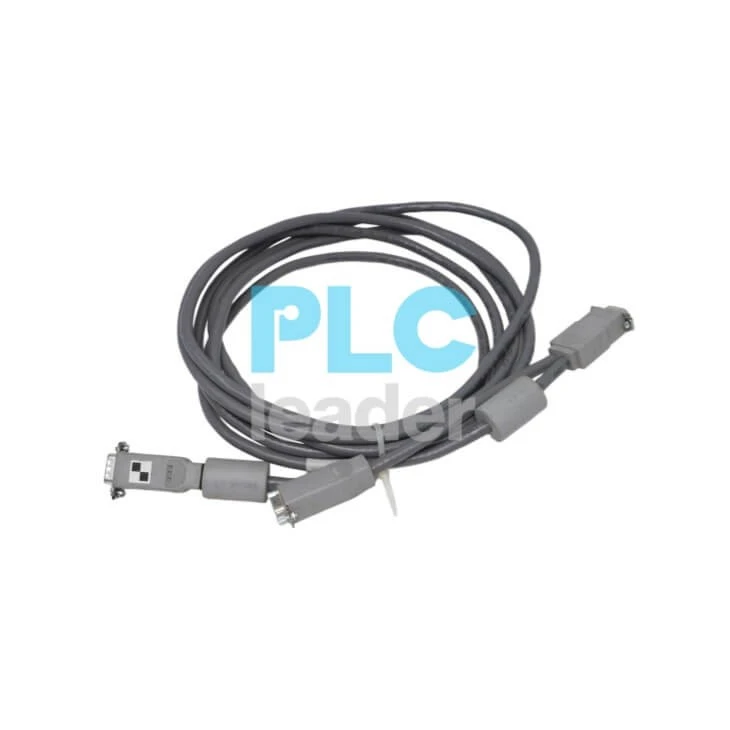
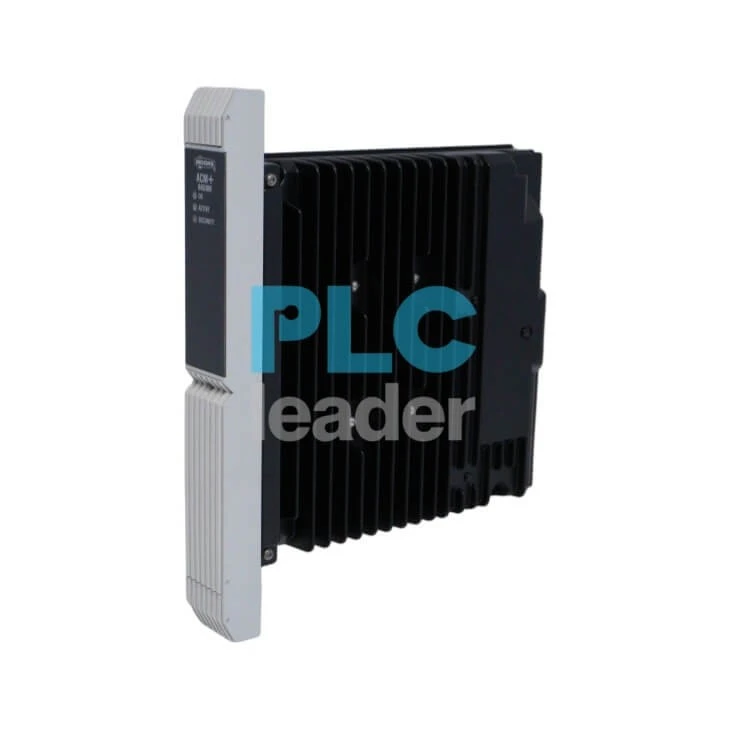
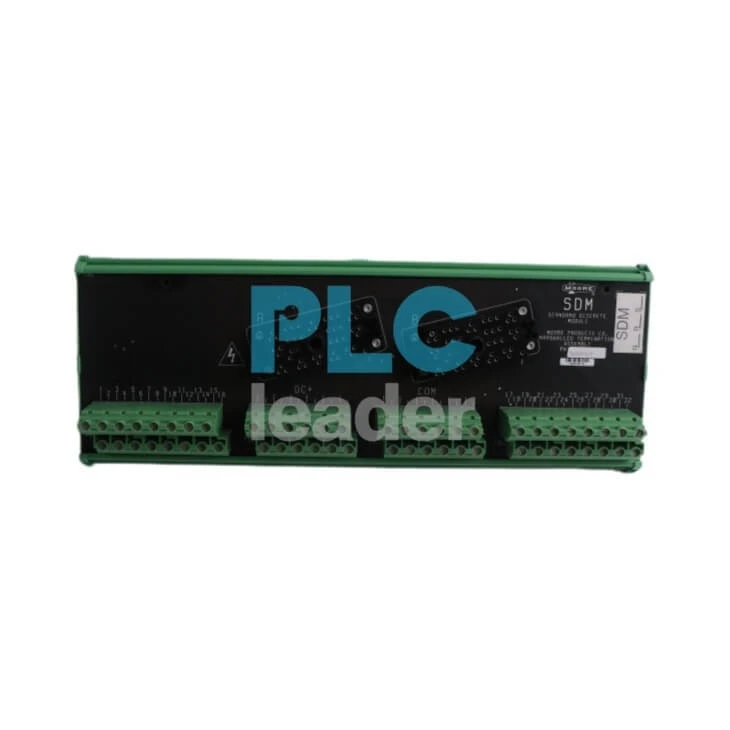
The Siemens Moore APACS+ and Quadlog control architectures remain the bedrock of legacy process automation in critical chemical, power, and manufacturing plants worldwide. As these systems have moved past their official lifecycle support milestones, securing premium, communication-verified hardware is essential to avoiding catastrophic mill or plant downtime.
PLC Leader maintains a dedicated engineering inventory of hard-to-find Siemens Moore 16267, 16167, 16137, and 16139 legacy modules, each rigorously bench-tested to ensure drop-in replacement compatibility.
Siemens Moore (APACS+) System Overview
| Family Name | Core Function | Representative Models | Siemens Lifecycle Status |
| Control Modules | System brain; executes control algorithms & logic. | 39ACM28ACN, 16139-218 (ACM+), QLACM14AAN | Product Discontinuation |
| Communication Cards | Network hub; handles system data transmission. | 16267-1/4 (MNI Card), 39MBXNAN, 39BCMNBN | Product Discontinuation |
| Interconnect Cables | Signal nerves; used for internal bus interconnection. | 16137-174, 16137-177, 16137-118, 16137-22 | Product Discontinuation |
| Termination Assemblies | Field interface; handles wiring & safety isolation. | 16167-1-7, 16167-1-9, 16428-1-03, 16420-1-03, 16169-1-7 | Product Discontinuation |
| Input/Output Modules | System senses; acquires & outputs field signals. | 39SDM024DCCBN, 39SAMCAN, 39HFM2CBN | Product Discontinuation |
📝 Notes & Technical Insights:
- Market Status: Siemens officially terminated all support for this series in 2020. Factory-new parts are entirely obsolete; the global market now relies solely on independent vendor availability (Legacy Stock).
- PN Compatibility: Part numbers starting with 16 (original Moore Products coding) and 39 (post-acquisition Siemens coding) for equivalent functional modules are fully compatible and interchangeable.
- Firmware & Revision: Core components like Control Modules and Communication Cards require exact hardware revision and firmware matching. Verify system compatibility prior to deployment.
Key Technical Compliance & Certifications
- Functional Safety (SIL3 / TÜV): The QUADLOG sub-series is certified by TÜV up to SIL3 (IEC 61508) and AK6 (DIN V VDE 0801). This legally qualifies the hardware for critical safety applications, Emergency Shutdown Systems (ESD), and Fire & Gas (F&G) systems.
- Hazardous Area Approvals (FM / CSA / ATEX): All core modules and Termination Assemblies (MTA) are certified for Class I, Division 2, Groups A, B, C, D (FM/CSA) and ATEX Zone 2 (EEx nA IIC T4). They are fully compliant for installation in explosive and hazardous environments.
- Harsh Environment Resilience (ISA G3): Circuit boards comply with the ANSI/ISA-S71.04 G3 (Harsh) corrosion standard. The convective conformal coating protects the hardware against highly corrosive gases found in chemical plants, refineries, and paper mills.
- Industry-Specific Regulated Approvals: The series carries Nuclear-grade evaluations (complying with IEEE 323/344 standards) and Marine Class Certifications (including ABS, DNV, and BV), ensuring historical and continued regulatory compliance on offshore platforms and legacy nuclear facilities.
- Environmental & Maintenance Exemption (RoHS): As an obsolete product line manufactured prior to modern restriction directives, these components fall under the "legacy repair and maintenance" exemption category globally. Buyers can legally import and deploy these parts for the upkeep of existing, fixed industrial installations.
Core Selection Guide: Siemens Moore 16137-174 vs. 16137-177
Solving the APACS+ Maintenance Dilemma: Identify Critical Specs to Ensure Plug-and-Play Replacement
In the Siemens Moore APACS+ / Quadlog Distributed Control Systems (DCS), the series serves as critical M-BUS interconnect communication cables, handling vital data transmission between racks and bus modules.
Since these are pre-fabricated factory cables, buying the wrong length or the incorrect redundancy side (A-Side vs. B-Side) will cause system initialization failures. To avoid unnecessary downtime, review the direct comparison between the 16137-174 and 16137-177 legacy stock below before placing your order:
Siemens Moore 16137-174 (Standard/A-Side Cable)
- Primary Use: Designed for standard, adjacent rack connections within the same APACS+ cabinet.
- Configuration: Optimized for standard M-BUS A-Side bus communication or simplex links.
- Shielding: Features standard industrial-grade EMI shielding.
Siemens Moore 16137-177 (Extended/B-Side Cable)
- Primary Use: Engineered with extended/revised length for cross-cabinet routing or longer distance bus expansions.
- Configuration: Specifically designated for B-Side bus backup or high-availability dual-redundant configurations.
- Shielding: Upgraded with enhanced double-shielding for environments with extreme electrical noise.
💡 Critical Maintenance Tip: Because the 16137 series consists of pre-terminated factory cables, they cannot be cut or spliced in the field. Always verify whether your system fault is on the primary A-Side or backup B-Side, and match the exact part number to ensure proper failover logic and physical fit.
Siemens Moore APACS+ / Quadlog Infrastructure Modules (16xxx Series)
- Backplane Interface: Integrated M-BUS (Module Bus) carrier board connections
- Hardware Type: Dedicated network cards, termination panels, interconnect cables, and processing units
- Operating Temperature: 0°C to 55°C (32°F to 131°F)
- Storage Temperature: -40°C to 70°C (-40°F to 158°F)
- Signal Protection: Heavy-duty shielding and isolation to suppress high-frequency line interference
- System Co-existence: Full backward compatibility with 39ACM28AEN local loops and Host Workstations

The following table provides the absolute hardware breakdown for all featured Siemens Moore series infrastructure elements, including correct card categorization, physical interfaces, and interconnect specifications.
| Product Image | Model Number | Module Classification | Function / Capacity | Interface & Ports | Backplane / Mounting Protocol | Action |
 |
16267-1/4 | ModulNet Interface Card | M-NET Peer-to-Peer Cluster Sync (M-NET) | 1 x Localized Network Receptacle | Standard M-BUS Backplane Slot | Inquire Now! |
 |
16167-1-7 | SDM Marshalling Board | Field Wiring Termination Panel | High-Density Screw Terminal Blocks | Direct Cabinet / DIN-Rail Mounting | Inquire Now! |
 |
16137-174 | Module Bus Interface Cable | Module-to-Carrier Interconnect | Shielded Bus Plug (4-Meter Link) | Dual-Carrier Signal Bus Link | Inquire Now! |
 |
16137-177 | Module Bus Interface Cable | Redundant B-Side Interconnect | Shielded Bus Plug (4-Meter Link) | Dual-Carrier Signal Bus Link | Inquire Now! |
 |
16139-218(39ACM28AEN) | Advanced Control Module | Multi-Loop Process Logic Execution | Local Serial Peer Port / 39ACM28AEN | Standard M-BUS Backplane Slot | Inquire Now! |
APACS+ & Quadlog Note:Internal manufacturing identifiers such as 16267-1/4 or 16137-174 denote specific physical PCB trace variations, cable layouts, and hardware revisions of the underlying Moore platform. Standard logic execution and field Marshalling signals run on separate, isolated hardware paths to maintain deterministic process synchronization. Advanced Control Modules (ACM) are certified for multi-loop regulatory logic execution. You must utilize the historical Moore Products configuration utility or Siemens 4-Blue systems to parameterize safety tasks and secondary partner peer-to-peer modules.
Siemens Moore 16xxx Series Field Terminal Blocks - Standard and Isolation Performance
Siemens Moore 16xxx series terminal boards are core physical interface components for APACS+ and CCM/SAM/SDM control systems. They are specifically designed to connect physical field instruments to rack-mounted I/O processing cards, providing reliable electrical connections and interference immunity in intensive discrete and process control applications. This series has extremely wide applications in existing legacy DCS systems. Although they lack the memory concept of a CPU processor, their high channel density and excellent physical isolation design are sufficient to meet the field wiring requirements of many demanding process industries such as chemical, pharmaceutical, and energy.
| Model Number | Manufacturer & Stamp | Component Type | Channels & Technical Specs | Action |
| 16428-1-03 |
MOORE INDUSTRIES (MOOR-IND) Stamp: CAI/+ |
Marshalled Termination Panel(CAI/SAI Analog Input Grouping Terminal Block) | 32-Channel High-Density Analog Interface | Inquire Now! |
| 16420-1-03 |
MOORE INDUSTRIES (MOOR-IND) Stamp: CDO/+ |
Marshalled Termination Panel(CDO/IDO Digital Output Grouping Terminal Block) | 16-Channel Isolated DC Output Termination | Inquire Now! |
| 16169-1-7 |
MOORE INDUSTRIES (MOOR-IND) Stamp: SAM |
Termination Board(SAM Status Assessment Module Control Wiring Board) | Dedicated Status Monitor Carrier Interface | Inquire Now! |
| 16167-1-9 |
MOORE INDUSTRIES (MOOR-IND) Stamp: SDM |
Marshalled Termination Panel(SDM Digital/SOE Event Sequence Recording Terminal Board) | High-Resolution Time-Stamped Discrete Assembly | Inquire Now! |
XT / Hardware Specifications:
- System Integration: Seamlessly matches Siemens Moore APACS+ and Moore Industries functional cabinets.
- Surface Protection: Standard factory conformal coated for severe chemical and high-vibration environment deployment.
Siemens Moore APACS+ Input/Output Modules
The Siemens Moore APACS+ signal input and output modules serve as the core deterministic sense and tune network for the underlying DCS infrastructure. These electronic cards continuously acquire precise environmental field readings and dispatch analog or discrete commands to field control elements, maintaining severe electromagnetic noise immunity.
| Product Image | Model Number | Module Classification | Core Function & Channels | Lifecycle Status | Action |
 |
39SDM024DCCBN | Sequence of Events Module | 24-Channel 24VDC Discrete Input with Time-Stamp | Obsolete / Stock Available | Inquire Now! |
 |
39SAMCAN | Status Assessment Module | System Health Diagnostics & Controller Heartbeat Sync | Obsolete / Stock Available | Inquire Now! |
 |
39HFM2CBN | High-Frequency Field Module | High-Speed Counter & Pulse Input / Frequency Tuning | Obsolete / Stock Available | Inquire Now! |
Notice:Engineering Procurement: When swapping redundant I/O module pairs inside live carriers, verify that your current host OS (e.g., APACS+ 4.x or 4-Blue environments) supports the specific firmware revision blocks to prevent backplane cluster mismatch.
Siemens Moore APACS+ / Quadlog Series Evolution
| Era / Generation | Developer | Core Technology & Network | Key Hardware Focus | Current Status |
| Gen 1: Innovation (1992 - 1999) |
Moore Products Co. | Proprietary M-BUS and MNET protocols. | APACS+ platform, 4-mation software, and TÜV-certified Quadlog SIS. | Fully obsolete. Factory replacements unavailable; network parts are highly scarce. |
| Gen 2: Maturation (2000 - 2009) |
Siemens (Post-Acquisition) | Industrial Ethernet Modules (IEM) bridging M-BUS to standard networks. | High-density I/O, heavy-duty termination assemblies (16167), and pre-terminated cables (16137). | Technical foundation of most active APACS+ systems running globally today. |
| Gen 3: Transition (2010 - 2020) |
Siemens Digital Industries | Migration toward SIMATIC PCS 7 / APACS+ OS architecture. | Windows 7 engineering stations and specialized MBI PCI cards for HMI upgrades. | Milestone PM400 reached. Siemens officially ceased new parts manufacturing on Sept 30, 2020. |
| Gen 4: Legacy (2020 - 2026+) |
Open Market Stockists | Migration phase to modern SIMATIC ET 200SP HA I/O systems. | Complete reliance on certified, original hardware stock. | Official Phase PM490/PM500. Certified legacy stock is primary for maintaining uptime. |
Seamless Support for Every Generation:
Whether your control cabinets rely on the early Moore architectures or the later, dual-redundant Siemens APACS+ hardware, our inventory covers components from every stage of this system's history. We provide verified legacy stock to support your existing infrastructure or to assist in a phased modernization strategy at your own pace.
APACS+ System Engineering Integration Guidelines
Carrier Backplane Power Consumption Calculations
Each active electronic module derives its operating logic voltage directly from the APACS+ rack carrier backplane M-BUS. When sizing power supply modules (such as the 39RPS), engineers must aggregate the total current consumption across the 5VDC and 24VDC rails for all installed active controllers and interface cards. Passive termination boards and interconnect cables do not draw power from the backplane.
Official Carrier Configuration Load Data:
- 16139-218 (Advanced Control Module): 1200 mA @ 5VDC // 40 mA @ 24VDC
- 16267-1/4 (ModulNet Interface Card): 650 mA @ 5VDC // 0 mA @ 24VDC
- 16428-1-03 / 16420-1-03 / 16169-1-7 / 16167-1-9 / 16167-1-7: Passive field termination components (0 mA backplane draw. Load is determined solely by the host I/O module).
- 16137-174 / 16137-177: Physical interconnect cables (0 mA load).
Data Retention & Memory Battery Management
The 16139-218 Advanced Control Module (ACM) relies on integrated non-volatile RAM (NVRAM) backed by a specialized lithium battery pack to preserve runtime registries, calibration limits, and real-time clock (RTC) variables during power blackouts.
- Operational Lifespan: 3 to 5 years.
- Diagnostics: Monitor the "BATT" diagnostic LED on the controller faceplate.
- Hot-Swap Rule: Replace the battery assembly while the carrier chassis remains powered. Onboard backup capacitance arrays provide approximately 15 minutes of bridge power if hot-swapped under a completely unpowered state, though this practice increases data loss risks.
Firmware & Engineering Software Compatibility Matrix
| Featured Reference Model | Module Classification | Minimum Firmware Baseline | Recommended Engineering Utility | Supported Architectural Scope | Action |
| 16139-218 | Advanced Control Module | v4.01 or higher | 4-Blue Utility / APS v6.x | Legacy Advanced Control & Complex Batch Loop Mapping | Inquire Now! |
| 16267-1/4 | ModulNet Interface Card | v3.50 or higher | M-NET Node Configurator | High-Speed Peer-to-Peer Backplane Cluster Sync | Inquire Now! |
| 16169-1-7 | SAM Termination Board | Passive / Matches Host Module | Standard APACS+ I/O Map | Full Diagnostics & Controller Heartbeat Synchronization | Inquire Now! |
| 16167-1-9 / 16167-1-7 | SDM Marshalled Panel | Passive / Matches Host Module | Standard APACS+ I/O Map | High-Resolution Time-Stamped Discrete Assemblies | Inquire Now! |
| 16428-1-03 / 16420-1-03 | CAI / CDO Termination Board | Passive / Matches Host Module | Process Automation Tools | 32-Ch Analog Inputs & 16-Ch Isolated Digital Outputs | Inquire Now! |
| 16137-174 / 16137-177 | Module Bus Interface Cable | Non-Firmware Component | Physical Link Connection | Shielded Inter-Carrier Dual-Bus Interconnect | Inquire Now! |
Firmware Notice: Down-grading firmware versions on legacy APACS+ processors is restricted. Prior to ordering replacement modules, check the existing module's hardware revision level via the diagnostic serial port terminal.
High-Availability Redundant Deployment
Deterministic Active-Standby Architecture
The Siemens Moore APACS+ system employs a fully redundant hardware-level architecture to ensure zero runtime interruptions in critical process loops. This high-availability design does not rely on software-layer polling, but instead achieves a true hardware-level primary/backup process pair through the underlying physical backplane and dedicated physical links. The primary controller deterministically synchronizes its internal data array, I/O dynamic states, and memory registers during each logical scan cycle.
Core Interconnect Infrastructure
For industrial environments requiring continuous production and where cold starts are not permitted, this deployment strictly relies on the hard-wired coordination and physical isolation of the following hardware components:
- 16139-218 Advanced Control Module: Deployed in a pair of control motherboards (Dual-Carrier), running the same user-configured logic as the primary/backup processor, enabling seamless control takeover preparation.
- 16267-1/4 ModulNet Interface Card: A core node of a dedicated peer-to-peer communication network (M-NET), responsible for millisecond-level real-time memory reflection between the primary and backup cards, providing the communication foundation for seamless handover.
- 16137-174 Module Bus Cable - Side A: A 4-meter shielded original manufacturer backbone bus cable, responsible for establishing a hard-wired data synchronization channel between the primary and backup motherboard bases.
- 16137-177 Module Bus Cable - Side B: A backup bus cable completely physically isolated from Side A, providing an independent second physical channel to ensure high availability of the redundant link even if the Side A bus is damaged.
Bumpless Transfer & Passive Isolation: In the event of an unrecoverable hardware failure or point-to-point communication interruption in the master control card (16139-218), the redundant bus system will immediately trigger a bumpless transfer, with the backup processor taking over control completely within milliseconds. Under this architecture, the externally supplied high-density terminal block assemblies (including 16428-1-03, 16420-1-03, 16169-1-7, 16167-1-9, and 16167-1-7) remain completely passive (0 mA backplane power consumption) and possess channel-level electrical isolation, ensuring that external short-circuit faults in field instruments will never affect or damage the central redundant logic rack at the back end.
APACS+ 16xxx Application Architecture & System Integration
The Siemens Moore APACS+ controller serves as the primary processing and communication node in various complex topologies within the process industry. Its multi-tasking control engine allows for simultaneous execution of deterministic control logic, peer-to-peer network communication, and high-density field cabling integration within a single motherboard chassis environment.
In large-scale distributed process control, the APACS+ system constructs a highly reliable peer network using dedicated NICs. This architecture focuses on highly deterministic real-time data synchronization and seamlessly integrates with host computers (such as 4-Blue or historical databases) to achieve real-time data exchange across the entire plant.
- Core components: 16267-1/4 ModulNet interface card, 16137-174 / 16137-177 module bus cable.
- Key advantages: Millisecond-level memory image reflection between primary/backup processors and between rack nodes ensures high throughput and zero packet loss in the control network.

Process Logic Control (Batch and Continuous Processes)
For industries with continuous processes or complex batch processing, such as chemical, power plant, and petrochemical plants, this architecture leverages the powerful loop handling capabilities of the Advanced Control Module (ACM). It can manage large-scale PID control, analog signal conditioning, and dual-machine hot standby configurations for controllers, preventing any unplanned downtime.
- Core Components: 16139-218 Advanced Control Module (ACM), 39ACM28AEN (Peer Control Unit).
- Key Advantages: Provides fully redundant hardware logic support, ensuring millisecond-level seamless switching in the event of a single point of hardware failure in critical process stages.
Field Signal Cabling Integration (High-Density Marshalling)
The APACS+ platform integrates physical instrument signals from the process field into the control system via external, dedicated high-density terminal blocks. This architecture focuses on channel-level electrical isolation and physical grouping, eliminating the need for cumbersome intermediate wiring trays.
- Core Components: 16428-1-03 (CAI Analog Input Terminal Block), 16420-1-03 (CDO Digital Output Terminal Block), 16167-1-7 / -1-9 (SDM Terminal Block), 16169-1-7 (SAM Terminal Block).
- Key Advantages: The external terminal blocks remain completely passive (0 mA backplane power consumption) and come standard with a factory-conformable anti-corrosion coating, physically isolating field-side electrical surge faults from the central control rack, improving the overall system's anti-interference capability.
Siemens Moore APACS+ Series: Component Replacement & System Migration Matrix
Family division and generational relationship of APACS+ series components
Throughout the series, the first five digits of the model number represent its functional family. Understanding these families helps in cross-model substitution analysis when inventory is low:
16167 / 16169 / 16267 Series (SAM/SDM/SMM Terminal Blocks): These are standard Marshall Terminal Blocks (MTAs). They are used to introduce field-generated discrete or analog signals into the system.
16420 / 16428 Series (Advanced/Safety Terminal Blocks): These are typically high-density terminal blocks or those with fuse protection, relay isolation, or suitable for QUADLOG safety systems.
16137 / 16139 Series (System Pre-fabricated Cables): The "nerve network" within the system, responsible for transmitting signals between the I/O module rack and the aforementioned terminal blocks.
The entire series of hardware-level replacement matrices (spare parts replacement level)
For inventory management and routine maintenance of the entire series, the replacement logic mainly follows the principles of equivalence or backward compatibility in terms of channel density, voltage level, and protection functions:
| Legacy Series | Replacement Direction | Key Technical Highlights |
|
Standard Discrete Terminal Block (Example: 16167-1-7, 16167-1-9) |
16167 Late High Revision or 39SDM... Series |
High Withstand Voltage & Channel Isolation replaces lower specs Based on late models with independent channel isolation |
|
Standard Analog Terminal Block (Example: 16169-1-7) |
16169 Same Family High-End Models or 39SAM... Series | HART Protocol Full Compatibility New 4-20mA terminal blocks with HART can completely replace early models |
|
High-Density/Protected Terminal Block (Example: 16420-1-03, 16428-1-03) |
16420/16428 Latest Version or 39IOM... Series | Strictly Verify Impedance & Fusing Current Integrated fuses or disconnect switches, parameters must be matched |
|
I/O Connection Cable (Example: 16137 series, 16139 series) |
Same Core Count, High Protection Level Cable | Core Alignment of Physical Length, Voltage Rating & Flame Retardant Level Teflon/highly flame-retardant outer jackets can directly replace early models |
The final matrix for migrating the entire system to a modern DCS (system transformation level)
Since the Siemens Moore APACS+ series is already in the late stage of its lifecycle (Legacy/Obsolete), Siemens has developed a clear and hierarchical upgrade and migration matrix for this entire series:
Option A: Controller Layer Upgrade (Retaining 16xxx Series Field Wiring)
Path: Retain existing 16167, 16169, 16420 terminal blocks and 16137 cables, without altering field wiring. Only upgrade the older APACS controllers to the later-stage ACM+ (Advanced Control Module+) or integrate them via APACS+ DBA tools.
Features: Most compatible with your existing legacy stock, high asset utilization, and extremely short downtime for upgrades.
Option B: Comprehensive I/O and Control Layer Migration (Complete Replacement)
Path: Completely scrap the entire Moore 16xxx series hardware and migrate it entirely to Siemens' existing SIMATIC PCS 7 or PCS neo system.
Hardware Mapping Relationships:
- 16167 / 16420 (Switch Terminals) ──► Replace with SIMATIC ET 200M / ET 200SP HA digital modules and front connectors.
- 16169 (Analog Terminals) ──► Replace with ET 200SP HA analog modules with HART functionality.
- 16137 / 16139 (Existing Cables) ──► Replace with Siemens standard Industrial Ethernet (PROFINET) or Profibus-DP bus cables.
Summary and key takeaways: When dealing with legacy stock in this series, replacements within the 16xxx series primarily depend on backward compatibility of electrical specifications (higher specifications replacing lower specifications); while future-oriented system migration involves gradually converting the entire 16xxx family into the SIMATIC automation product line using official toolkits.
Troubleshooting and Diagnostic Procedures
Core Module Diagnostics (Mainly for 16267 MNI and Active Cards)
The modules in this series utilize onboard microprocessors. The primary and most direct diagnostic reference in the field is the front panel LED indicator matrix.
Status LED: Steady Green | Active LED: Steady/Flashing Green
Diagnosis: The module is functioning correctly, operating as the Primary unit, and maintaining normal communication with the backplane/network.
Status LED: Steady Green | Active LED: OFF
Diagnosis: The module is functioning correctly and is currently in the Backup (Redundant) state.
Status LED: Steady Red
Diagnosis: Fatal Error / Hardware Failure. The module failed its Power-On Self-Test (POST) or triggered a Watchdog timeout.
Corrective Action: Do not attempt component-level repair in the field. Initiate the redundant switchover and replace the module immediately.
Status LED: Flashing Red
Diagnosis: Non-Fatal Error / Configuration Mismatch. Typically caused by network communication loss, calibration data corruption, or disconnection from the underlying MTA (Marshalled Termination Assembly).
Marshalled Termination Assembly (MTA) Troubleshooting (For 16167 / 16137 / 16139 Series)
The 16167, 16137, and 16139 components are MTAs responsible for field signal conditioning and termination. Failures typically manifest as lost signals, bad quality bits, or channel saturation.
Procedure 1: Channel Signal Isolation Testing
- Disconnect the field wiring at the specific channel terminals on the MTA showing a "BAD" quality status on the HMI.
- Use a process calibrator (e.g., Fluke 744) to inject a standard 4-20mA or 24 VDC signal directly into the MTA input.
- Evaluation: If the HMI reading returns to normal, the MTA and the upper-level I/O card are intact; the fault lies in the field instrument or field cabling. If the error persists, proceed to Procedure 2.
Procedure 2: MTA Electrical Inspection
- Fuse Verification: Many discrete/power distribution MTAs feature onboard subminiature fuses. Use a multimeter to check for continuity. If blown, verify there is no short circuit in the field before replacing it with a fuse of identical specifications (typically 1/16A or 1/8A fast-acting).
- Ribbon Cable Inspection: Inspect the multi-conductor ribbon cables connecting the MODULRAC enclosure to the MTA. Loose connectors will cause an entire group of channels (e.g., 8, 16, or 32 channels) to fail simultaneously.
Safety Standard for Hot Swapping and Fault Rectification
⚠️ CRITICAL SAFETY WARNING: Although the APACS+ system supports standard hot-swapping, any maintenance involving communication modules (like the 16267) or QUADLOG Safety Instrumented Systems (SIS) must strictly adhere to the following sequence to prevent bus crashes or accidental system trips.
- Verify Redundancy Status: Before removing any faulty module, verify that its redundant counterpart (Backup Module) has a steady green Status LED and displays a READY_BACKUP status within the system software (4-Command / APS). Never hot-swap a card if the system is running non-redundantly.
- ESD Protection: Maintenance personnel must wear a properly grounded ESD wrist strap before touching any components.
- Module Extraction: Loosen the two retaining screws at the top and bottom of the module faceplate. Pull the module smoothly and straight out along the guide rails. Avoid rocking the module side-to-side to prevent damaging the backplane pins.
- Hardware & Firmware Verification: Ensure that the part number, suffix, and firmware revision of the replacement module match the failed unit exactly (e.g., matching the exact revision code of the 16267-1-4).
- Insertion and Synchronization: Insert the new module into the slot and secure the screws. The module will initiate its POST (Power-On Self-Test), and the Status LED will cycle through Red - Amber - Green. The controller will automatically download the configuration or perform network synchronization. The process is complete once the Status LED stabilizes at Steady Green.
Recommendations and Disclaimers:
Siemens Moore APACS+ systems worldwide have entered the Mature/Obsolete stage of their lifecycle. Official recommendations state that all troubleshooting actions should be performed by certified automation engineers only when the device does not involve high-risk interlocks or is in a safe shutdown state. When dealing with safety-related or high-current MTA boards such as 16137/16167, never blindly modify internal jumper configurations while the device is powered on.
FAQ
Frequently Asked Questions
Q: What is the primary application difference between the 16167-1-7 and 16167-1-9 terminal blocks?
A: The 16167-1-7 is designed for standard 24VDC Discrete Input/Output (DI/DO) signal marshaling in APACS+ systems, while the 16167-1-9 is specifically certified and components-selected for high-reliability safety loops within the QUADLOG architecture.
Q: Can a 16267-1/4 MNI module be replaced with a 16267-1/2 version during system maintenance?
A: No. The suffix "-1/4" and "-1/2" denote different hardware revisions and network port specifications; mixing them will cause backplane communication mismatches or database synchronization errors between redundant pairs.
Q: Why must the length and part number specifications of 16137-174, 16137-177, and 16139-218 cables be strictly followed?
A: These cables carry high-frequency M-BUS and I/O bus signals where improper lengths or impedance mismatches (e.g., swapping a 16137 for a 16139 cable) will cause signal reflection, data packet loss, and intermittent I/O rack dropouts.
Q: What is the critical firmware consideration when replacing a QUADLOG 16428-1-03 or 16420-1-03 safety component?
A: The replacement module must have the exact same firmware version pre-loaded as the failed unit; a version mismatch will fail the safety configuration validation check, causing the module to lock in a safe-state fault mode.
Inventory and ordering
We stock the following Siemens Moore APACS+ legacy controller and module models (legacy stock available):
- 16267-1/4, 16167-1-7, 16167-1-9, 16137-174, 16137-177, 16139-218, 16428-1-03, 16420-1-03, 16169-1-7
All units include:
- Original Siemens Moore / Moore Products packaging or secure industrial bulk packaging
- Clear product status report (hardware revision level, date code, firmware baseline if applicable)
- 1-year replacement warranty
Lead time: Same-day processing for in-stock items. Shipping via DHL, UPS, or FedEx.
Need help verifying firmware compatibility or safety certification requirements?
- Email: sales7@apterpower.com
- WhatsApp: +86 180 3017 5807
- Response time: < 2 hours during business hours (GMT+8)


