

As a supplier of ABB Bailey INFI 90 systems, I've had the privilege of delving deep into the intricacies of this remarkable industrial automation platform. One of the most frequently asked questions I encounter is about the programming languages used for ABB Bailey INFI 90. In this blog post, I'll explore the programming languages that power this system and how they contribute to its efficiency and reliability.
The Role of Programming Languages in ABB Bailey INFI 90
ABB Bailey INFI 90 is a distributed control system (DCS) widely used in various industries, including power generation, oil and gas, and chemical processing. It plays a crucial role in monitoring and controlling industrial processes, ensuring optimal performance, safety, and productivity. Programming languages are the tools that enable engineers to develop the control strategies and applications that run on the INFI 90 system.
Ladder Logic
Ladder logic is one of the most commonly used programming languages in industrial automation, and it has a significant presence in ABB Bailey INFI 90. This graphical programming language is based on the concept of electrical relay circuits, making it easy for electrical engineers and technicians to understand and work with.
In ladder logic, programs are represented as a series of rungs, each containing one or more contacts and coils. Contacts can be thought of as switches that can be either open or closed, while coils represent outputs that can be energized or de - energized. By arranging these contacts and coils in a logical sequence, engineers can implement complex control algorithms.
For example, in a power generation plant using ABB Bailey INFI 90, ladder logic can be used to control the start - up and shut - down sequences of generators. Contacts can be used to monitor the status of various sensors, such as temperature and pressure sensors, and coils can be used to control the operation of valves, motors, and other equipment.
Function Block Diagram (FBD)
Function Block Diagram is another important programming language used in ABB Bailey INFI 90. FBD is a graphical language that represents control algorithms as a set of interconnected function blocks. Each function block performs a specific task, such as arithmetic operations, logical operations, or signal processing.
Function blocks can be pre - defined or user - defined. Pre - defined function blocks are provided by the INFI 90 system and cover a wide range of common control functions, such as PID (Proportional - Integral - Derivative) controllers, timers, and counters. User - defined function blocks allow engineers to create custom functions tailored to specific application requirements.
In an oil and gas processing plant, FBD can be used to implement complex control strategies for fluid flow control. Function blocks can be used to calculate flow rates, compare them with setpoints, and adjust the position of control valves accordingly. This graphical representation makes it easy to visualize the control logic and troubleshoot any issues that may arise.
Structured Text
Structured Text is a high - level programming language similar to Pascal or C. It is used for more complex programming tasks in ABB Bailey INFI 90, where a more detailed and flexible programming approach is required.
Structured Text allows engineers to write programs using statements, variables, functions, and procedures. It supports conditional statements (such as if - then - else), loops (such as for and while loops), and data types (such as integers, floating - point numbers, and arrays).
In a chemical processing plant, Structured Text can be used to implement advanced control algorithms for chemical reactions. Engineers can use Structured Text to perform complex calculations, manage data storage, and communicate with other systems.
Instruction List (IL)
Instruction List is a low - level programming language that is similar to assembly language. It consists of a series of instructions that are executed sequentially. IL is used in situations where precise control over the system's resources is required.
Each instruction in IL performs a specific operation, such as moving data between memory locations, performing arithmetic operations, or controlling the flow of the program. While IL is more difficult to read and write compared to other programming languages, it offers the advantage of high - speed execution and fine - grained control.
In some applications where real - time performance is critical, such as high - speed motor control in a manufacturing plant, Instruction List can be used to optimize the code and ensure fast response times.
The Importance of Compatibility and Integration
One of the strengths of ABB Bailey INFI 90 is its ability to support multiple programming languages. This allows engineers to choose the most appropriate language for each task, depending on the complexity of the control strategy, the skills of the development team, and the specific requirements of the application.
Moreover, these programming languages are integrated seamlessly within the INFI 90 system. Programs written in different languages can communicate with each other, share data, and work together to achieve the overall control objectives. For example, a ladder logic program can call a function block written in FBD, or a Structured Text program can access data generated by an Instruction List program.
Our Product Offerings
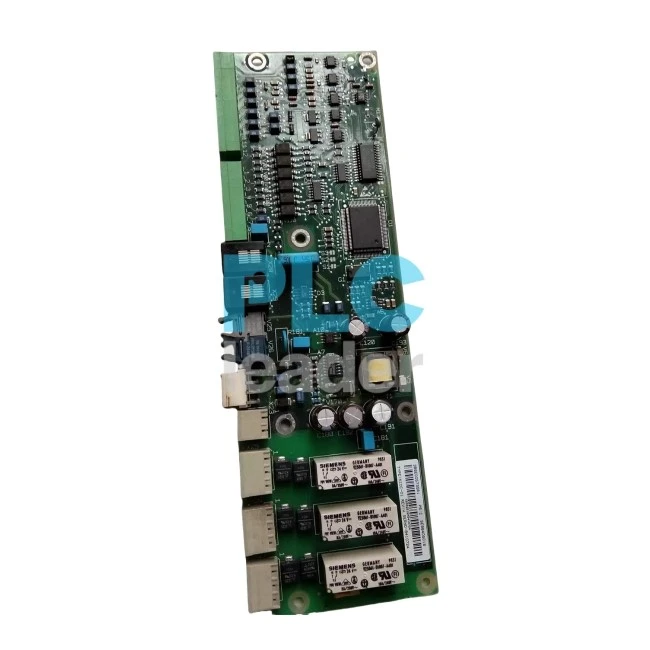
As a supplier of ABB Bailey INFI 90, we offer a wide range of products that are essential for the operation of the system. For instance, the ABB NTDO02 Bailey Infi 90 Digital Output Termination Unit is a key component for managing digital outputs. It provides a reliable interface between the INFI 90 system and external devices, ensuring accurate and efficient control.
The ABB NI0C01 3BSE005735R1 Drives Input Output Base Board is another important product. It is designed to handle input and output signals for drives, allowing for precise control of motors and other drive - based equipment.
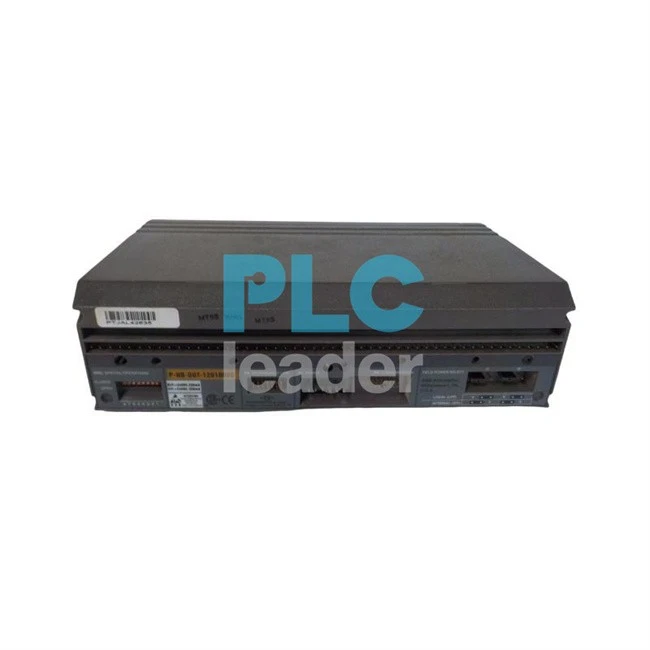
We also offer the ABB BAILEY P - HB - DOT - 12010000 Output Module, which provides additional output capabilities for the INFI 90 system. This module can be used to expand the system's control capacity and support more complex applications.
Conclusion and Call to Action
In conclusion, ABB Bailey INFI 90 supports a variety of programming languages, including ladder logic, function block diagram, structured text, and instruction list. Each language has its own strengths and is suitable for different types of control tasks. The ability to use multiple languages and integrate them seamlessly makes the INFI 90 system a powerful and flexible platform for industrial automation.
If you are in the market for ABB Bailey INFI 90 products or need assistance with programming and system implementation, we are here to help. Our team of experts has extensive experience in working with the INFI 90 system and can provide you with the best solutions for your industrial automation needs. Contact us to start a procurement discussion and take your industrial processes to the next level.
References
- "Industrial Automation Programming Languages" by John Doe, published by Industrial Automation Press.
- "ABB Bailey INFI 90 System Manual", ABB Corporation.
- "Control Engineering Handbook", edited by Richard C. Dorf.